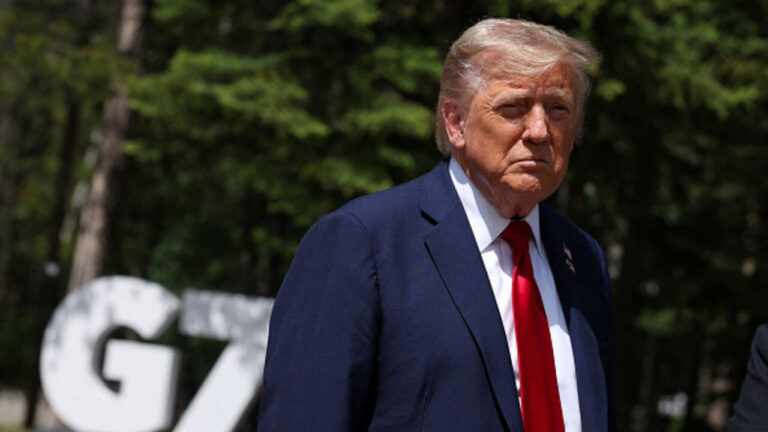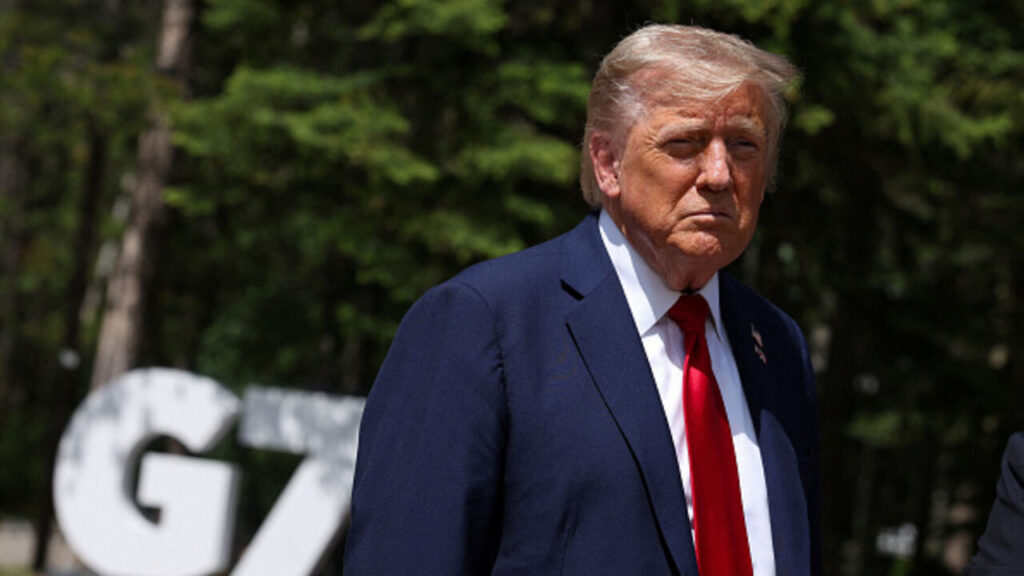
US President Donald Trump speaks to reporters with the British prime minister (out of frame) during the Group of Seven (G7) Summit at the Pomeroy Kananaskis Mountain Lodge in Kananaskis, Alberta, Canada on June 16, 2025. US President Donald Trump was leaving a Group of Seven summit early on Monday as he hinted of greater involvement in the Israel-Iran conflict after issuing an ominous warning for the capital Tehran to evacuate. (Photo by Suzanne Plunkett / POOL / AFP) (Photo by SUZANNE PLUNKETT/POOL/AFP via Getty Images)
U.S. President Donald Trump issued a direct and urgent call on Monday for American citizens and allied nationals to evacuate Tehran “without delay,” as the escalating Iran-Israel war entered its fifth day. With missile strikes, air raids, and mounting casualties on both sides, President Trump warned of “imminent danger” to foreigners in Iranian territory, escalating international concern over the spiraling conflict.

US President Donald Trump speaks to reporters with the British prime minister (out of frame) during the Group of Seven (G7) Summit at the Pomeroy Kananaskis Mountain Lodge in Kananaskis, Alberta, Canada on June 16, 2025. US President Donald Trump was leaving a Group of Seven summit early on Monday as he hinted of greater involvement in the Israel-Iran conflict after issuing an ominous warning for the capital Tehran to evacuate.
Speaking from the White House, President Trump said that the U.S. intelligence community has gathered “concrete evidence” of further planned Iranian retaliatory strikes and urged a full-scale withdrawal of non-essential personnel from the region.
“The situation in Tehran and across Iran has become extremely dangerous. All American citizens and allies are urged to leave immediately. We will not risk American lives in the middle of Iran’s war of aggression,” Trump said during the press conference.
The evacuation advisory marks the strongest action yet by the Trump administration amid rising fears of a broader regional conflict in the Middle East.
Conflict at a Boiling Point
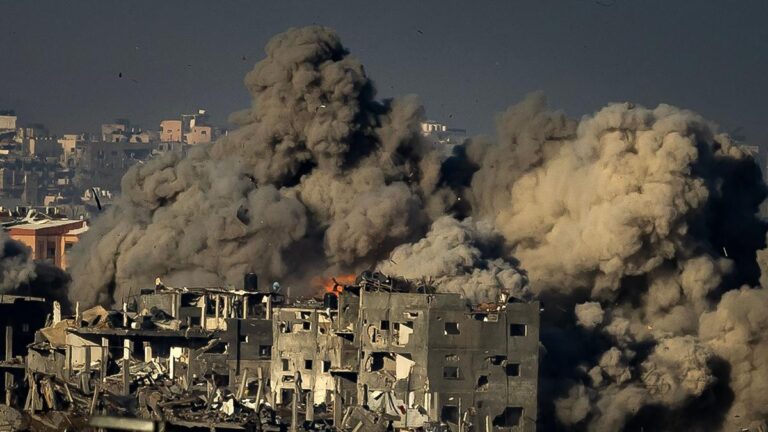
Since the outbreak of open hostilities five days ago, both Iran and Israel have exchanged heavy missile fire, launched drone strikes, and conducted targeted operations. The Iranian Revolutionary Guard Corps (IRGC) has fired dozens of missiles into Israeli territory, hitting cities like Tel Aviv, Haifa, and Ashkelon. At least 8 Israeli civilians have been killed, and over 100 wounded.
Israel has responded with airstrikes on Iranian military and nuclear-related facilities in Isfahan, Shiraz, and the outskirts of Tehran. According to Israeli officials, their targets include missile production sites, drone bases, and suspected nuclear development zones.
The most dramatic moment came when a blast rocked Iran’s state-run TV headquarters during a live broadcast — a symbolic and psychological blow that Iran has blamed directly on Israel.
Trump’s Stand: “We Stand with Israel”
President Trump reaffirmed the United States’ “ironclad support” for Israel and condemned Iran for “destabilizing the region for decades.”
“Iran is the leading state sponsor of terror in the world. Their aggression toward Israel and toward peace-loving nations will not be tolerated,” he said. “We will support our ally Israel with every resource necessary.”
Though the U.S. has not yet taken direct military action, Trump confirmed that American forces in the Gulf region have been placed on high alert, with aircraft carriers and missile defense systems repositioned closer to strategic zones, including the Strait of Hormuz.
Evacuation Orders and Embassy Movements
The U.S. State Department has elevated Iran’s travel advisory to Level 4: Do Not Travel, and issued an emergency order for remaining diplomats and citizens to leave the country immediately. While the U.S. has no embassy in Tehran, Swiss diplomats — who represent U.S. interests in Iran — have reportedly begun preparing for rapid withdrawal.
Several European countries, including Germany and France, have also urged their citizens to exit Iran. Commercial flights from Tehran’s Imam Khomeini International Airport have been sharply reduced, and many air carriers have suspended operations entirely.
Tensions Across the Region
As the Iran-Israel war drags into its fifth day, regional instability continues to grow. Hezbollah militants in southern Lebanon have launched several rocket attacks into northern Israel, raising fears that Lebanon could become another battleground.
In Iraq, pro-Iranian militias have begun threatening U.S. military outposts, prompting heightened security at bases in Erbil and Baghdad. Gulf nations such as Saudi Arabia, the UAE, and Qatar are urging both sides to de-escalate and have offered to mediate ceasefire negotiations.
However, neither Iran nor Israel appears ready to back down.
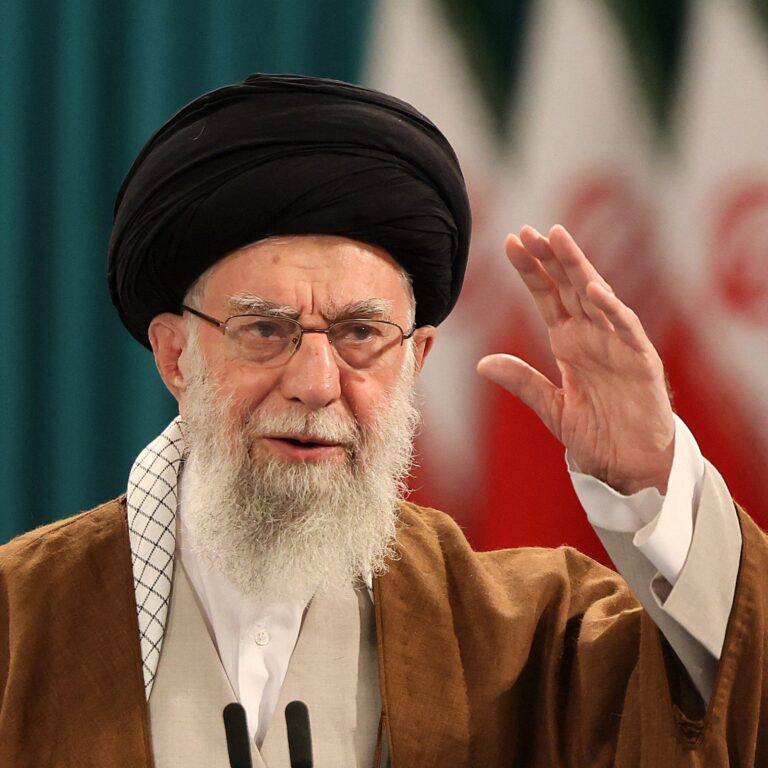
Iran’s Supreme Leader Ayatollah Ali Khamenei vowed that Iran will “continue resistance” and promised “a crushing response” to Israeli attacks. In contrast, Israeli Prime Minister Benjamin Netanyahu declared in a televised speech: “We will defend our land, our people, and our future. This war was brought to us by Iran. We will finish it on our terms.”
Economic Shockwaves
Global markets are reacting with alarm. Oil prices have soared past $116 per barrel, and defense stocks have surged. Shipping lanes in the Persian Gulf remain tense, with fears that Iran could attempt to close the Strait of Hormuz — a move that would choke a significant portion of the world’s oil supply.
Airspace over much of the Middle East has been restricted, and global airlines are rerouting flights away from the region. Humanitarian organizations have warned of a looming crisis if the war continues, especially as food and medical supply chains are disrupted in both Iran and Israel.
What’s Next?
President Trump’s administration has called for an emergency session of the United Nations Security Council and is reportedly in talks with Gulf states and European allies to form a diplomatic coalition pressuring Iran to halt its military aggression.
Still, with ongoing missile exchanges, political rhetoric intensifying, and evacuations underway, the risk of the conflict spreading beyond Iran and Israel remains dangerously high.
Whether the U.S. or international community can broker a pause in hostilities remains uncertain — but the urgency is clear. As the world watches, the Middle East again finds itself on the brink of a broader and more devastating war.