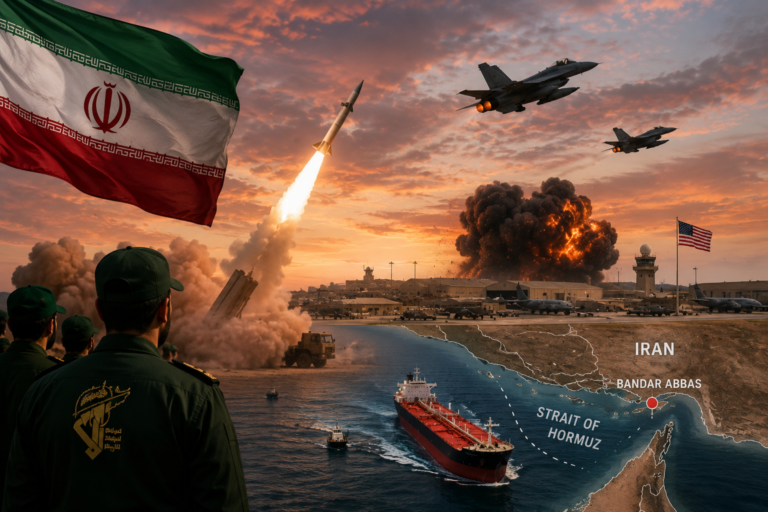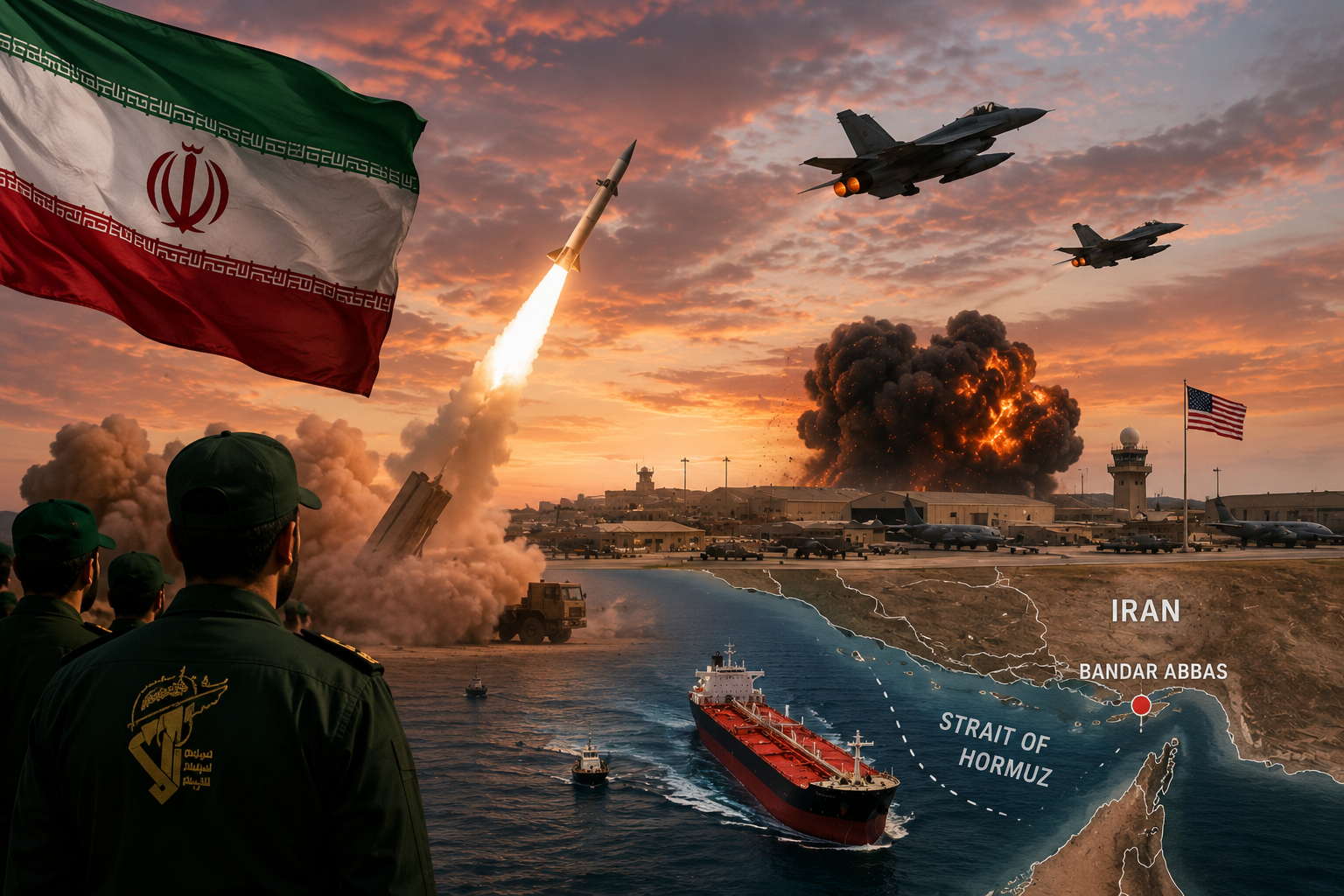
The fragile ceasefire between the United States and Iran has come under renewed pressure after Iran’s Islamic Revolutionary Guard Corps (IRGC) announced that it had targeted a US airbase in response to recent American military strikes near the Strait of Hormuz. The latest exchange of military actions has heightened fears of a broader regional escalation and raised concerns about the future of ongoing diplomatic efforts.
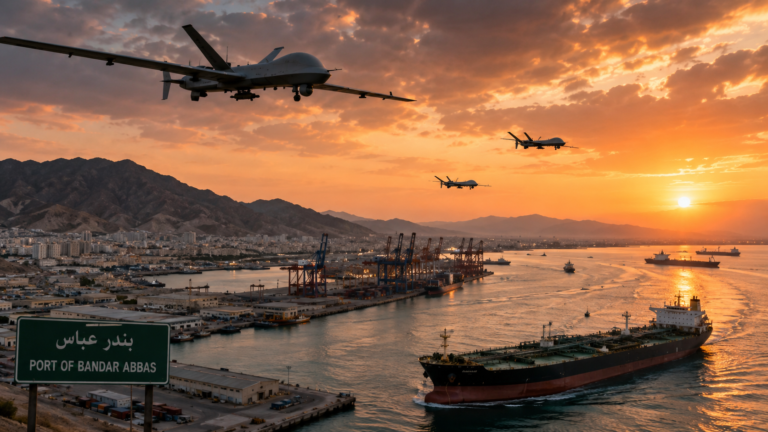
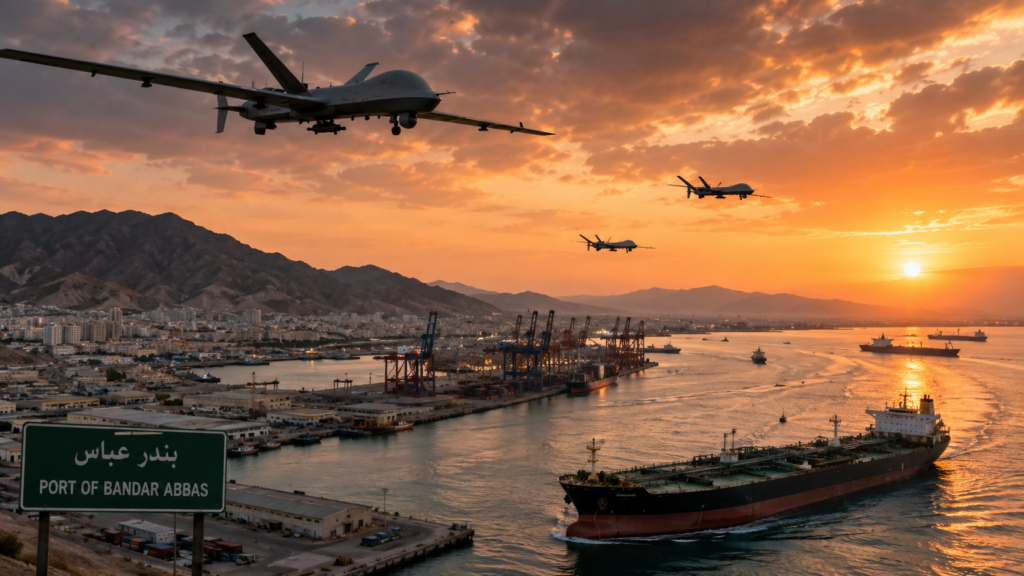
The confrontation follows a series of US military operations that Washington described as defensive measures. American officials stated that their forces carried out strikes against Iranian military assets near the strategic port city of Bandar Abbas after identifying what they believed to be imminent threats to US personnel and regional security.
According to the US military’s Central Command (Centcom), one of the targeted locations was a military site that was reportedly preparing to launch an attack drone. US forces also claimed to have intercepted and destroyed several Iranian drones operating near the Strait of Hormuz, one of the world’s most important maritime trade routes.
Iran strongly condemned the strikes, describing them as a violation of the ceasefire and an act of aggression. Shortly afterward, the IRGC announced that it had launched a retaliatory operation against a US airbase in the region. Iranian officials characterized the strike as a direct response to American military actions and warned that further attacks would be met with additional measures.
Strategic Importance of the Strait of Hormuz
The Strait of Hormuz remains one of the most strategically significant waterways in the world. Located between Iran and the Arabian Peninsula, the narrow passage serves as a critical route for global energy supplies. A substantial portion of the world’s oil exports passes through the strait every day, making stability in the region essential for international markets.
Since the conflict intensified several months ago, commercial shipping traffic through the strait has faced repeated disruptions. Shipping companies have been forced to alter routes, delay cargo movements, and increase security measures. As a result, global energy markets have experienced increased volatility, with oil prices reacting sharply to developments in the region.
Analysts warn that any further deterioration in security conditions could have far-reaching economic consequences. Even limited military exchanges in the Gulf region can affect investor confidence, energy supplies, and international trade.
Bandar Abbas at the Center of Recent Developments
The Iranian port city of Bandar Abbas has become a focal point in the latest round of tensions. Situated along the northern coast of the Strait of Hormuz, the city serves as one of Iran’s most important commercial and military hubs.
Reports from Iranian media indicated that explosions were heard in areas east of the city following the US strikes. While Iranian authorities have not released detailed information regarding the extent of the damage, local reports suggested increased military activity in the region after the attack.
US officials maintained that the strikes were carefully targeted and intended solely to address immediate threats. They emphasized that the operations were not designed to escalate the conflict but rather to protect American forces and preserve the ceasefire.
However, Iranian leaders rejected that explanation, arguing that any military action against Iranian territory undermines efforts to reduce tensions.
Political Pressure on Both Sides
The renewed confrontation comes at a politically sensitive moment for both governments. In Washington, President Donald Trump has defended his administration’s approach, insisting that military decisions are based on security concerns rather than domestic political considerations.
During a cabinet meeting, Trump stated that Iran’s negotiating position had weakened significantly and argued that continued pressure would help achieve US objectives. He also dismissed suggestions that upcoming political events in the United States would influence his administration’s strategy.
Meanwhile, Iranian leaders have faced pressure from domestic audiences demanding a firm response to foreign military actions. The announcement of a retaliatory strike against a US airbase appears intended to demonstrate Iran’s willingness to respond to perceived threats while maintaining its broader negotiating position.
Despite the hostile rhetoric from both sides, diplomatic contacts have continued. Negotiators remain engaged in efforts to prevent the conflict from expanding into a larger regional war.
Ceasefire Under Strain
The ceasefire that currently exists between the United States and Iran was already considered fragile before the latest exchange of strikes. Military incidents, competing narratives, and deep political distrust have repeatedly tested the agreement.
Observers note that ceasefires often face their greatest challenges when both sides believe they are acting defensively. The United States argues that its recent operations were necessary to protect personnel and shipping lanes, while Iran claims its response was justified retaliation against foreign attacks.
This cycle of action and reaction creates significant risks for regional stability. A single miscalculation could trigger a broader confrontation involving additional military assets and regional partners.
International organizations and several governments have called for restraint, urging both sides to avoid steps that could further escalate tensions. Many diplomats believe that preserving communication channels remains essential to preventing a larger conflict.
Global Implications
The consequences of the US-Iran confrontation extend far beyond the Middle East. Financial markets, energy producers, shipping companies, and governments around the world are closely monitoring developments.
Oil prices have remained sensitive to news from the Gulf region, reflecting concerns that disruptions to shipping traffic could affect global energy supplies. Insurance costs for commercial vessels operating near the Strait of Hormuz have also increased as security risks remain elevated.
Experts warn that prolonged instability could slow economic activity in multiple regions, particularly for countries that depend heavily on imported energy.
For now, the situation remains fluid. Both Washington and Tehran continue to exchange warnings while simultaneously pursuing diplomatic discussions. Whether those negotiations can withstand the latest military confrontation remains uncertain.
The coming days are likely to be critical in determining whether the ceasefire survives or whether the region moves closer to a new phase of conflict. As international attention remains focused on the Gulf, world leaders continue to call for restraint and renewed diplomatic engagement.
About the Author