The United States has carried out another round of military strikes against Iranian targets, marking the second such operation within three days and raising concerns about the stability of the current ceasefire between the two countries.
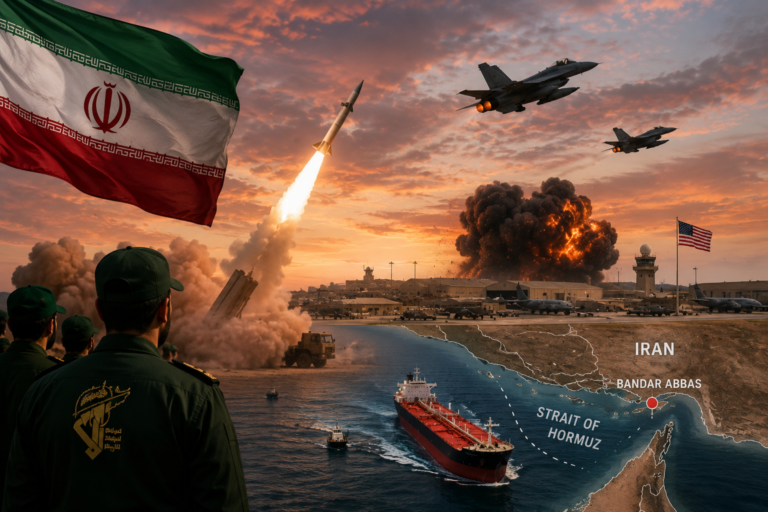
According to the US military’s Central Command (Centcom), American forces targeted a military site near Bandar Abbas, a strategically important port city located along Iran’s southern coast. The military stated that the site was preparing to launch a drone when it was struck.
Centcom also reported that US forces intercepted and destroyed four Iranian one-way attack drones that were considered a threat to operations around the Strait of Hormuz, one of the world’s most critical shipping routes for oil and gas transportation.
Iranian media reported explosions east of Bandar Abbas following the strike. Meanwhile, Iran’s Islamic Revolutionary Guard Corps (IRGC) claimed it had shot down a US drone and fired at additional American aircraft that allegedly entered Iranian airspace, although Iranian officials did not provide detailed information regarding the timing of those incidents.
The latest developments come during an already tense period of negotiations aimed at ending a three-month conflict that has disrupted maritime traffic in the Strait of Hormuz and contributed to higher global energy prices.
Speaking during a cabinet meeting, US President Donald Trump said that Iran’s negotiating position had weakened significantly. He also emphasized that domestic political considerations, including the upcoming US midterm elections, would not influence his administration’s approach to the conflict.
US military officials described the recent operation as a defensive measure rather than an escalation. Centcom stated that the strike was intended to preserve the ceasefire and protect American personnel from potential threats.
Earlier in the week, the United States confirmed another series of strikes in southern Iran. Those operations reportedly targeted missile launch sites and vessels suspected of attempting to deploy naval mines in the Strait of Hormuz. According to US officials, the actions were designed to ensure the safety of military forces and maintain freedom of navigation in the region.
Iran strongly condemned the attacks, describing them as a serious violation of the ceasefire agreement. Iranian authorities warned that any hostile action would receive a response, signaling the possibility of further tensions despite ongoing diplomatic efforts.
The renewed military activity has increased uncertainty over the future of the ceasefire. Analysts warn that even limited confrontations could undermine negotiations and further disrupt global energy markets, which remain sensitive to developments in the Gulf region.
As both sides continue to exchange accusations while pursuing talks, the international community is closely monitoring the situation. The coming days may prove critical in determining whether diplomacy can prevent a return to broader conflict.
About the Author