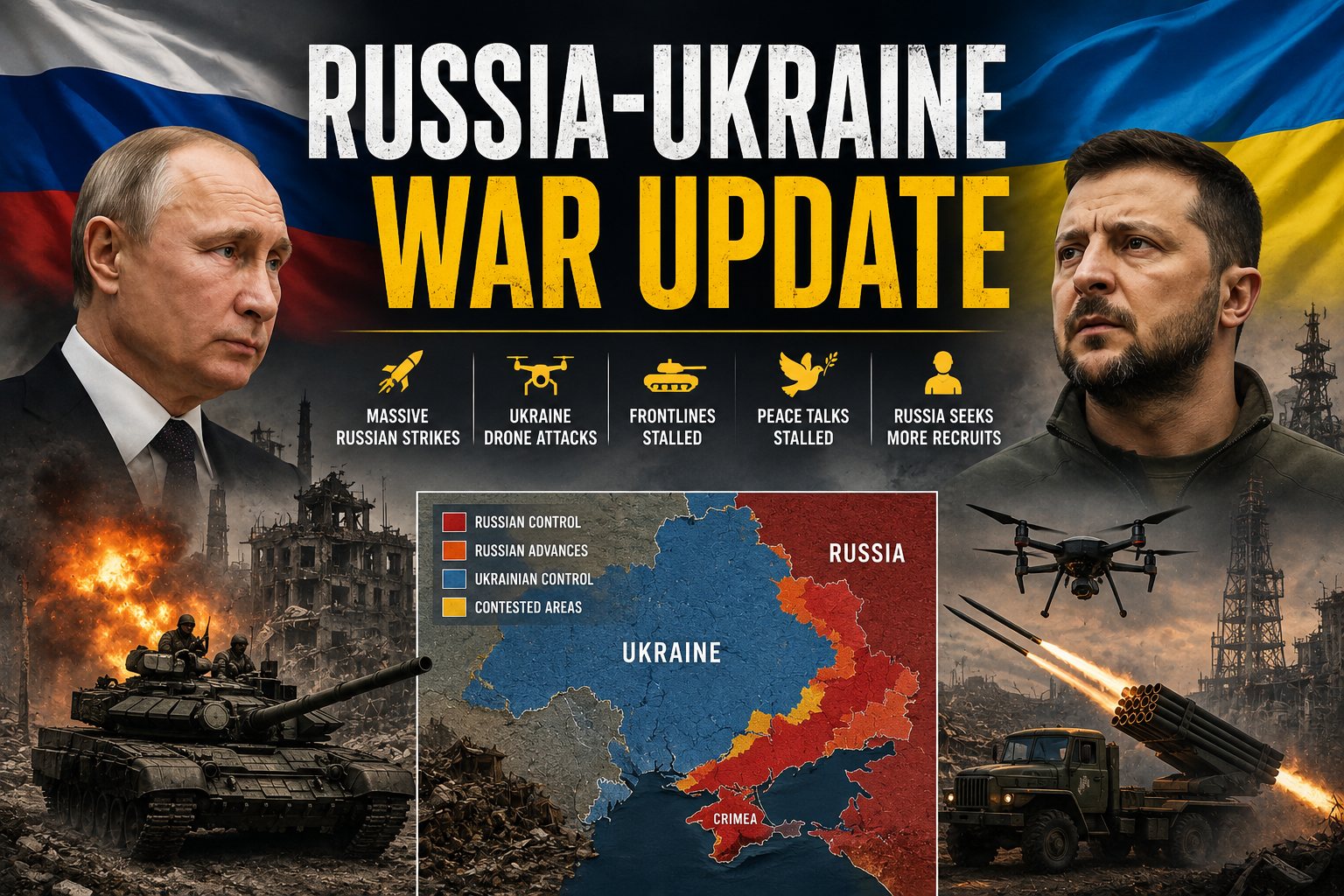
The Russia-Ukraine war has entered another dangerous phase, with both sides escalating military operations while hopes for a lasting peace agreement remain distant. Recent weeks have seen some of the largest aerial attacks of the conflict, renewed drone warfare, and growing concerns that the war could continue well into 2027.
Massive Russian Strikes Hit Kyiv
Russia has launched a fresh wave of missile and drone attacks targeting Kyiv and several other Ukrainian cities. Ukrainian officials describe the attacks as among the largest conducted against the capital since the war began. Residential areas, infrastructure facilities, and military targets have reportedly been hit, causing casualties and significant damage.
The attacks demonstrate Moscow’s continued ability to conduct large-scale aerial operations despite more than four years of conflict. Ukrainian air defenses intercepted many incoming drones and missiles, but several managed to reach their targets, highlighting the ongoing challenges facing the country’s defense systems.
Russia Warns Foreign Missions
In a move that has drawn international attention, Russia has reportedly warned foreign diplomatic missions about the possibility of further large-scale strikes. The warning has fueled concerns that military activity around Kyiv could intensify in the coming weeks.
Western governments have not indicated plans to withdraw their diplomatic personnel, but the development underscores the heightened tensions surrounding the conflict.
Ukraine Expands Drone Campaign
Ukraine has continued to strike targets inside Russian territory using long-range drones. Ukrainian forces have focused on oil depots, energy infrastructure, logistics hubs, and military facilities that support Russia’s war effort.
These attacks are part of Kyiv’s broader strategy to disrupt Russian supply chains and increase the economic cost of the war for Moscow. The growing effectiveness of drone technology has transformed the conflict, allowing both sides to strike far beyond the front lines.
Front Lines Remain Largely Stalled
Despite intense fighting, the battlefield situation remains relatively stable. Russia continues to apply pressure in eastern Ukraine, particularly in the Donetsk region, but has struggled to achieve a decisive breakthrough.
Military analysts note that Russian advances have slowed considerably compared to earlier stages of the war. At the same time, Ukraine has been unable to launch a major counteroffensive capable of reclaiming large areas of occupied territory.
As a result, the conflict increasingly resembles a war of attrition, with both sides seeking to wear down their opponent over time.
Peace Talks Show Little Progress
Attempts to revive peace negotiations have produced limited results. Although temporary ceasefire arrangements have occasionally reduced violence in specific areas, both Russia and Ukraine continue to accuse each other of violations.
The United States and several European countries remain engaged in diplomatic efforts, but major disagreements over territory, security guarantees, and future political arrangements continue to block a comprehensive settlement.
For now, there is little indication that either side is prepared to make the concessions necessary for a lasting peace agreement.
Russia Seeks More Recruits
Russian President Vladimir Putin has recently introduced additional incentives for military recruits and their families, including financial support measures and debt-relief programs.
The move suggests that Moscow is preparing for a prolonged conflict and is focused on maintaining troop levels despite the heavy demands of the war. Recruitment and military production remain key priorities for the Russian government as it seeks to sustain operations.
Who Has the Advantage?
Determining a clear winner remains difficult.
Russia retains advantages in manpower, missile production, and military manufacturing capacity. It continues to conduct large-scale attacks and maintains control over significant portions of Ukrainian territory.
Ukraine, meanwhile, has demonstrated resilience through effective drone operations, improved air defenses, and continued support from Western partners. Its ability to strike targets deep inside Russia has become an important element of its military strategy.
At present, neither side appears capable of achieving a decisive military victory in the near future.
Impact on India and Global Markets
The ongoing conflict continues to influence global energy markets and international trade. India remains one of the largest buyers of discounted Russian oil, helping stabilize domestic energy costs.
Any major escalation could push global oil prices higher, increasing inflationary pressures worldwide. Conversely, progress toward a ceasefire or peace agreement could reduce uncertainty in energy markets and benefit oil-importing nations.
Outlook for the Coming Months
Most analysts believe the war is likely to continue through the remainder of 2026. Both Russia and Ukraine appear committed to pursuing their military objectives, while diplomatic efforts remain stalled.
With drone warfare expanding, missile attacks intensifying, and neither side showing signs of backing down, the conflict remains one of the most significant geopolitical challenges facing the world today.
About the Author