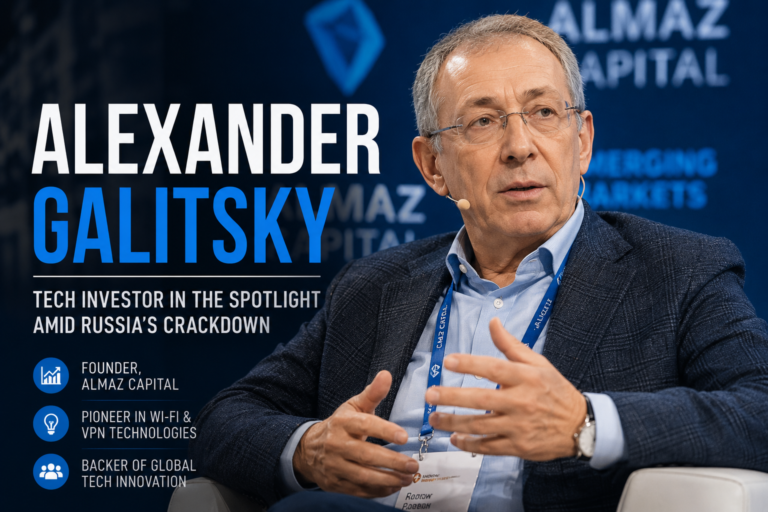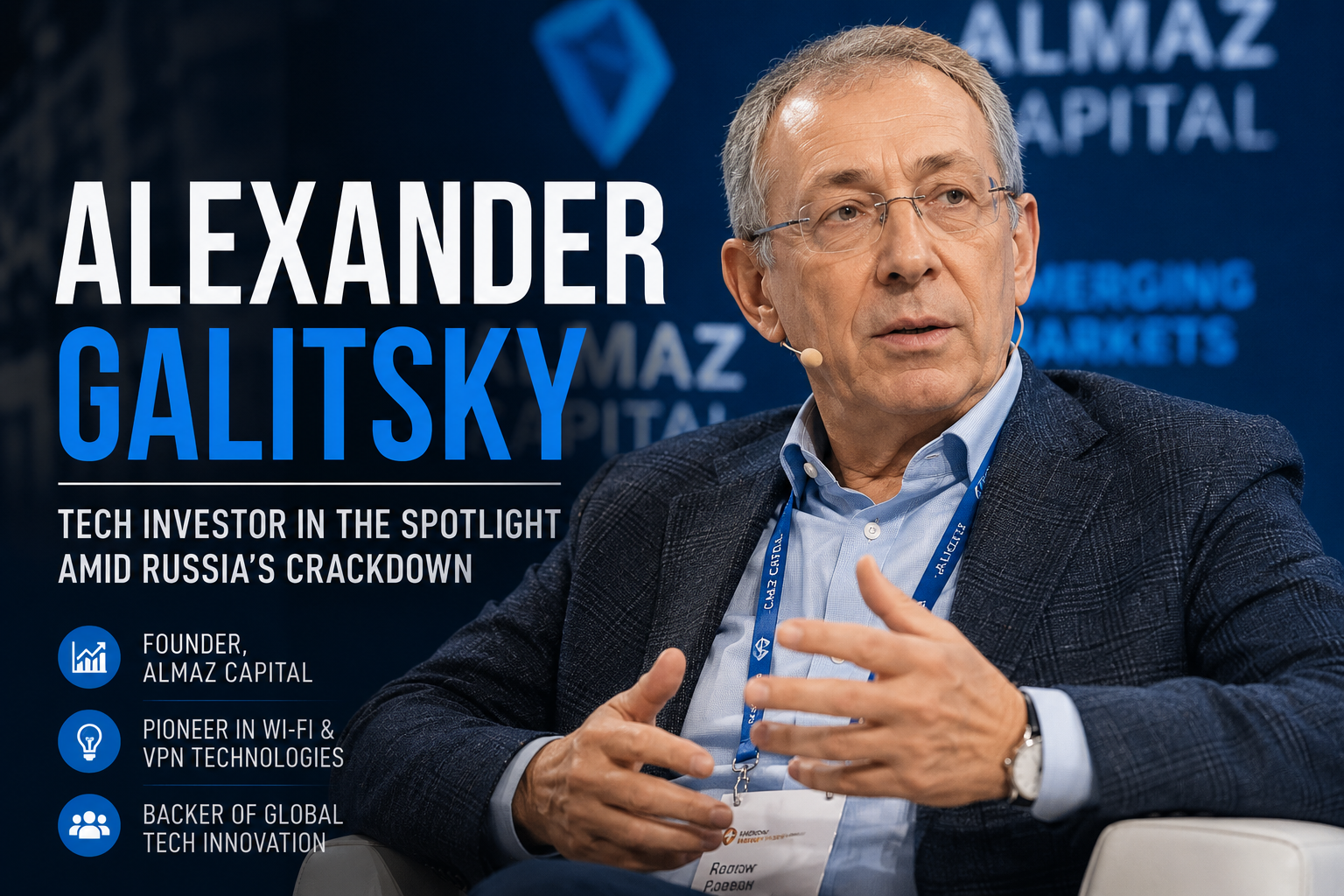
Technology investor Alexander Galitsky has become the focus of growing attention after Russian authorities launched legal actions against him and his venture capital firm. The case has attracted interest from the global technology and investment community because of Galitsky’s long-standing role in supporting startups and innovation across Eastern Europe and beyond.
Galitsky is widely recognized as one of the pioneers of the post-Soviet technology sector. Over several decades, he built a reputation as an engineer, entrepreneur, and venture capitalist. His career began in advanced telecommunications and networking technologies, where he worked on research and development projects before moving into the private sector.
As the technology industry expanded in the 1990s and 2000s, Galitsky became involved in supporting emerging startups. He later founded Almaz Capital, an investment firm focused on technology companies in areas such as software, cybersecurity, cloud computing, and digital infrastructure. The firm became known for backing innovative businesses and helping them reach international markets.
In recent years, geopolitical tensions have increasingly affected the business environment for investors operating across national borders. Following the deterioration of relations between Russia and many Western countries, several entrepreneurs and investment groups faced greater scrutiny regarding their international activities.
Against this backdrop, Russian authorities initiated legal proceedings involving Galitsky and his investment firm. Officials argued that the organization had acted against Russian interests and sought restrictions on its operations within the country. The move represented one of the most significant actions taken against a prominent technology investor in recent years.
The case has sparked debate among business observers. Some analysts view it as part of a broader effort by Russia to increase control over economic activities linked to foreign investors and international capital. Others believe it reflects the increasingly complex relationship between technology, finance, and geopolitics in the modern world.
Supporters of Galitsky point to his long history of promoting innovation and entrepreneurship. They argue that venture capital plays an important role in helping startups grow, create jobs, and develop new technologies. According to this view, restrictions on investment activity could make it more difficult for emerging companies to secure funding and compete internationally.
Critics, however, argue that governments have the right to examine financial activities that they believe may affect national interests. They note that many countries have strengthened oversight of foreign investments in strategic sectors, particularly during periods of international tension.
Regardless of the outcome, the dispute highlights the challenges facing global investors in an increasingly divided geopolitical environment. Technology companies often operate across multiple countries, making them vulnerable to political and regulatory changes beyond their control.
For the international startup community, the developments surrounding Galitsky serve as a reminder that business success alone does not guarantee protection from political and legal risks. Investors and entrepreneurs are paying close attention to the case because it may influence future decisions about where capital is invested and how technology businesses expand across borders.
As legal proceedings continue, the situation remains an important example of how politics, economics, and innovation are becoming more closely connected in today’s global marketplace.
About the Author