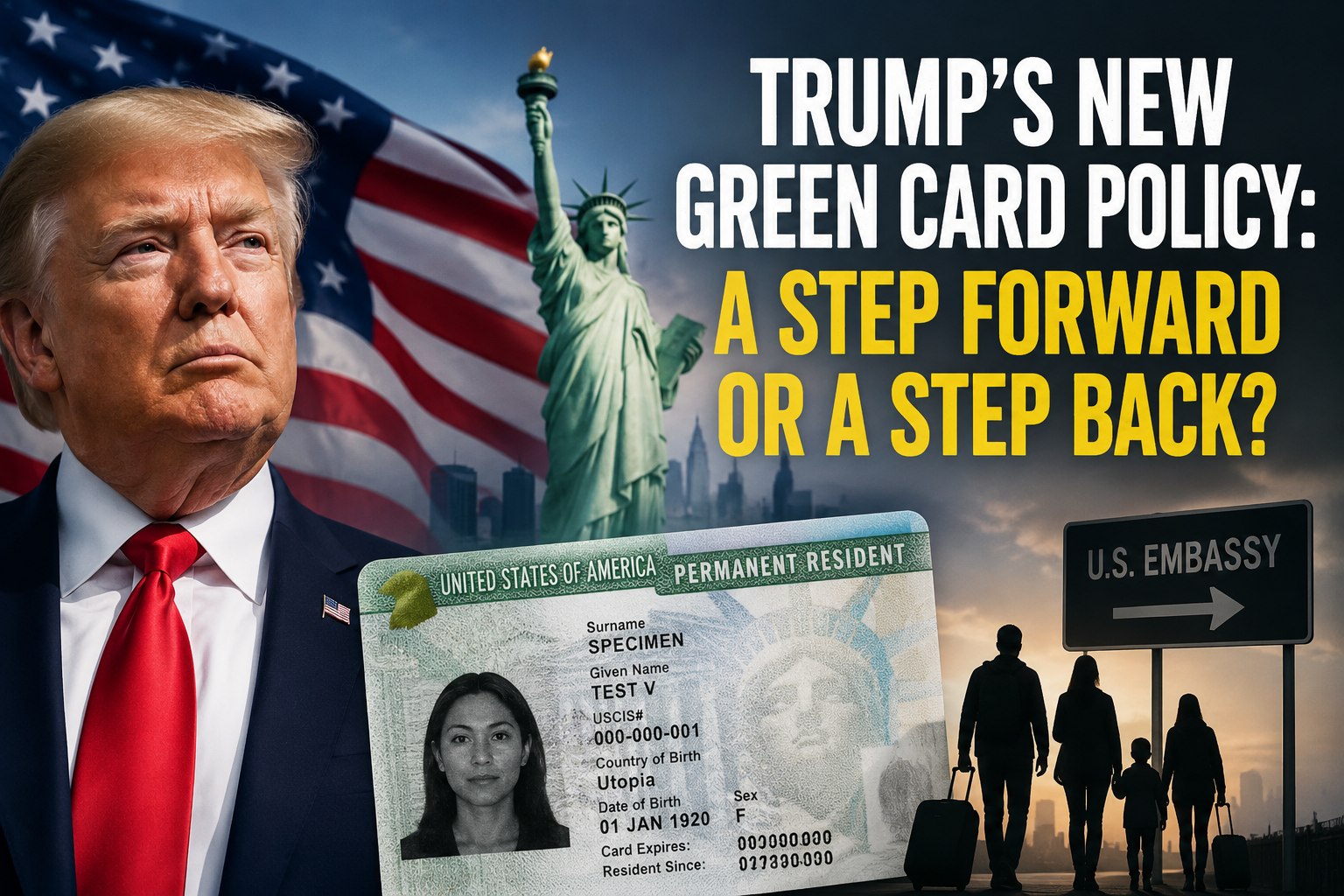
News Desk: For decades, the United States has been viewed as a land of opportunity for talented professionals, students, researchers, and hardworking immigrants from around the world. Millions of people have moved to America seeking better education, career growth, and a more secure future. However, the Trump administration’s newly announced green card policy has raised serious concerns about whether the country is moving away from that long-standing image.
Under the new policy, most immigrants currently living in the United States will reportedly be required to leave the country and complete their green card process through a U.S. embassy or consulate abroad. While the administration describes the move as an effort to restore order to the immigration system, critics argue that the policy could create unnecessary hardship for legal immigrants and their families.

Why Is the Policy Being Criticized?
The Trump administration says the policy is intended to reinforce the original purpose of immigration laws and reduce the misuse of temporary visas as a pathway to permanent residency. Supporters believe stricter controls are necessary to protect the integrity of the immigration system.
However, critics argue that the new approach may target people who are already following legal procedures. For years, eligible applicants were able to complete the “Adjustment of Status” process while remaining inside the United States. This system helped families stay together, allowed companies to retain skilled workers, and gave international students a clearer path toward long-term stability.
By making overseas processing the norm, the administration may be introducing uncertainty into the lives of millions of legal immigrants.
Impact on Families
One of the biggest concerns is the effect on families. Many immigrants have spent years building their lives in the United States. Their children attend American schools, they pay taxes, and they contribute to local communities.
If applicants are forced to leave the country during the green card process, families could face long separations due to embassy backlogs and administrative delays. In some cases, individuals may even face legal complications when trying to return to the U.S.
Immigration advocates argue that the policy overlooks the human side of immigration and focuses too heavily on enforcement.
A Challenge for American Businesses
America’s technology, healthcare, and research sectors rely heavily on highly skilled foreign workers. From Silicon Valley engineers to medical researchers and university scientists, immigrants play a major role in driving innovation and economic growth.
Critics warn that increased immigration uncertainty may encourage skilled professionals to choose countries like Canada, the United Kingdom, or Australia instead of the United States.
This could eventually weaken America’s ability to attract global talent — something that has historically been one of the country’s biggest competitive advantages.
Will It Actually Reduce Illegal Immigration?
The administration has often linked stricter immigration policies with border security and efforts to reduce illegal immigration. However, opponents question whether making life harder for legal applicants will significantly solve those problems.
Many analysts believe the policy could have only a limited effect on illegal immigration while placing a heavier burden on people who are already complying with the law.
As a result, critics say the move risks punishing legal immigrants more than addressing the root causes of undocumented migration.
America’s Global Image at Stake
One of America’s greatest strengths has always been its reputation as a country where talent and hard work can create opportunity. Students, entrepreneurs, and professionals from around the world have long viewed the United States as a place where they could build a better future.
If immigration policies become increasingly unpredictable or politically driven, that image could begin to weaken.
At a time when many countries are competing to attract skilled workers and international investment, some experts believe overly restrictive immigration policies could hurt America’s long-term global influence.
Possible Legal Challenges Ahead
Legal experts also expect court challenges against the policy. In the United States, immigration agencies have broad authority, but that authority is not unlimited. If courts determine that the administration has overstepped its legal powers or created unfair barriers, parts of the policy could potentially be blocked or revised.
The Trump administration has faced similar legal battles over previous immigration measures, including travel bans and asylum restrictions. Therefore, this issue could become another major legal and political debate in the coming months.
Conclusion
Every country has the right to manage its borders and immigration system. However, immigration policy should balance national security concerns with economic needs and humanitarian considerations.
The main criticism of this new green card policy is that it may create fear and instability for people who are already living legally in the United States and contributing to American society.
If America wants to maintain its position as a global leader in innovation, business, and higher education, many believe it must continue to remain attractive not only to capital and technology — but also to talent from around the world.
About the Author